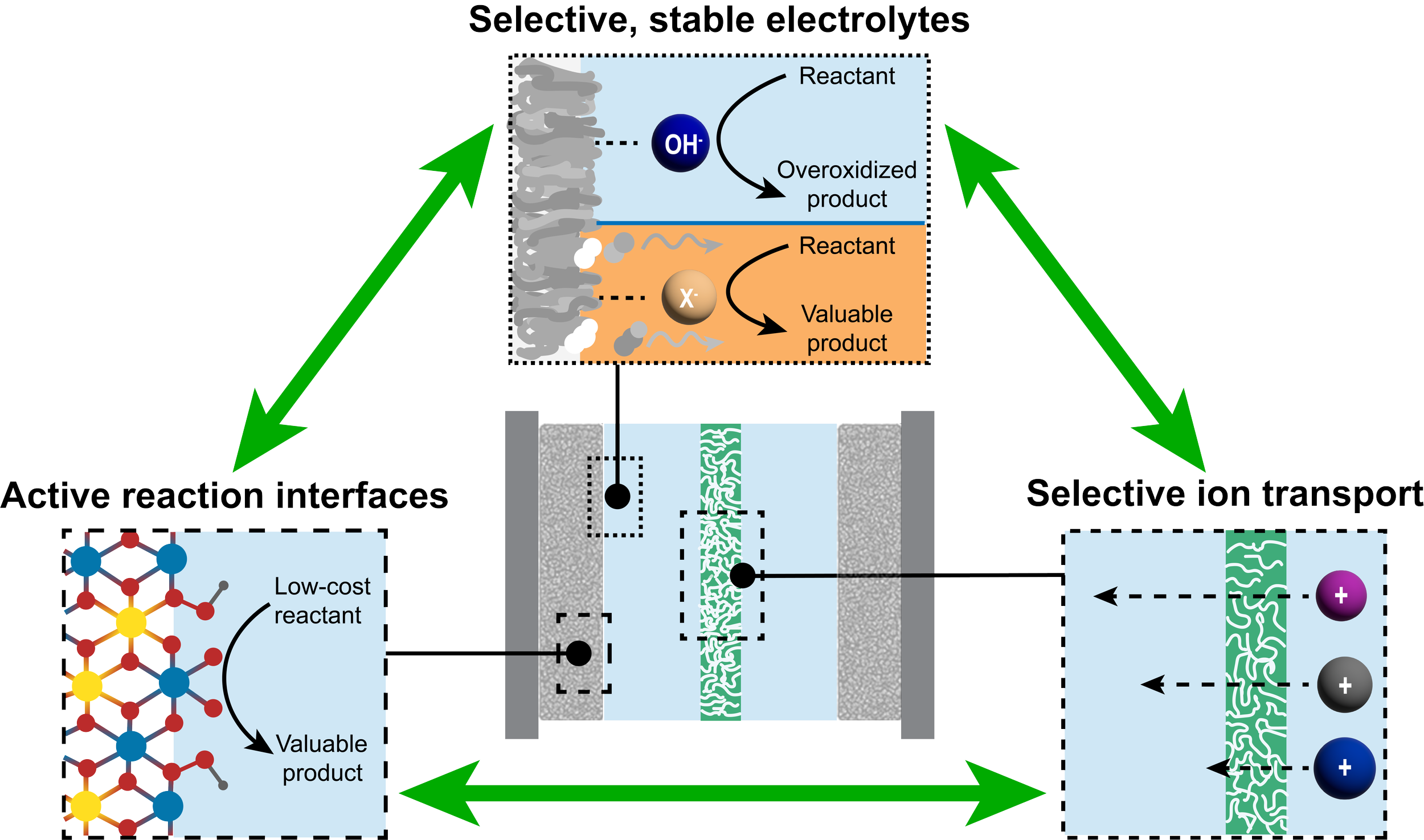
Electrochemical Engineering for Reactive Separations and Chemical Conversions
The Yap lab develops next generation electrochemical separation and conversion technologies. We achieve this by combining a fundamental understanding of thermodynamics, kinetics, and transport with material design and reactor engineering to unlock new pathways to achieve electrochemical separations and conversions. We tune electrochemical interfaces and the interactions between these interfaces to achieve high performance electrochemical reactors.
Our research topics include:
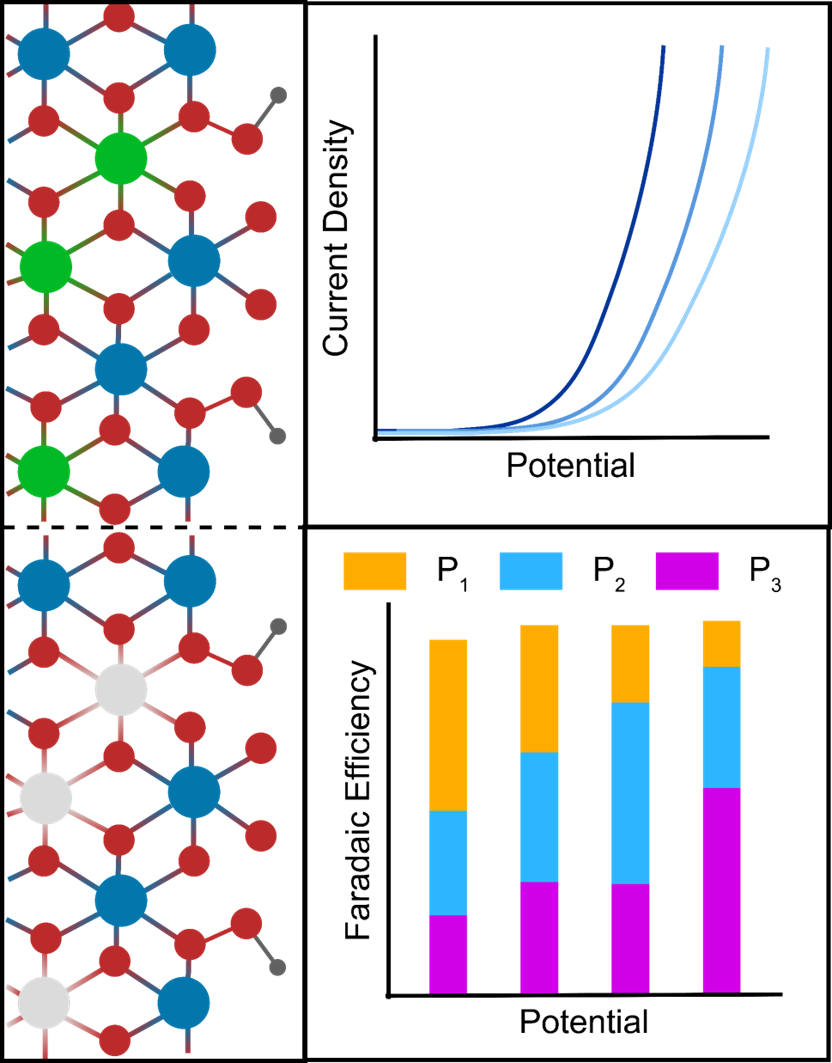
Electrochemical Interface Design
Electrochemical interfaces can be used to achieve simultaneous reactive separation and chemical conversion. We engineer electrochemical interfaces using methods including:
Electrocatalyst design
Electrode design
We analyze these interfaces against
Electrochemical reaction performance
Electrocatalyst stability
Current electrochemical reactions we are interested in exploring include:
Organic oxidation reactions
Oxygen evolution reaction
Halide-assisted reactions
Reduction reactions
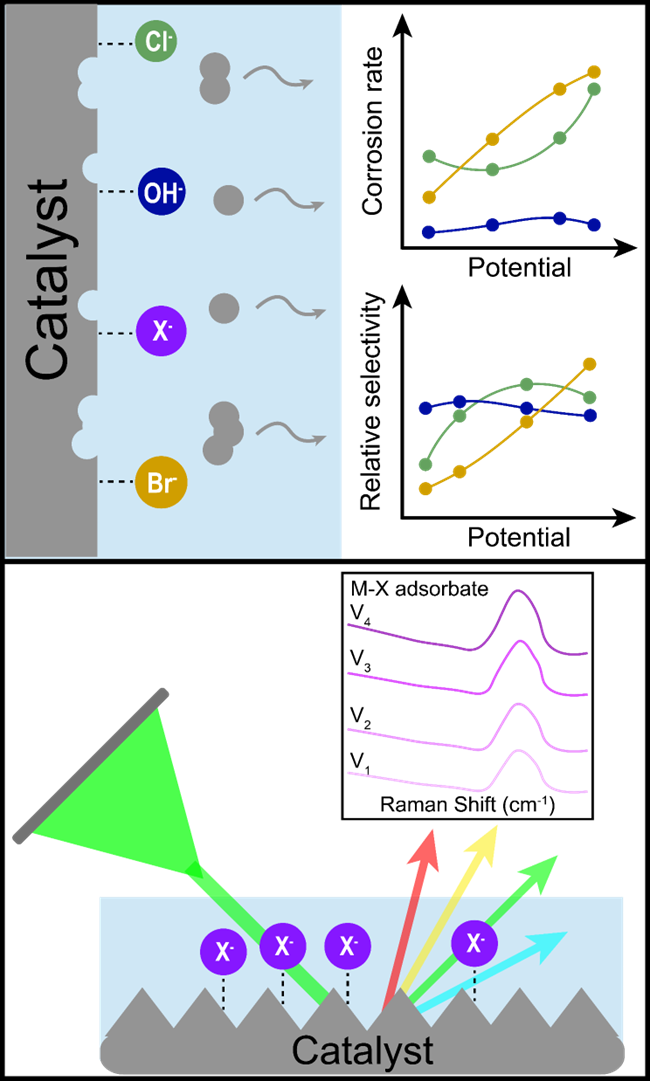
Electrolyte Design
Electrolytes can influence the electrochemical reaction microenvironment and dictate the transport of reactive (and non-reactive) species between electrodes. We are interested in exploring:
Aqueous and non-aqueous electrolyte compositions
Solid-state electrolytes
Ion effects on electrochemical performance
Our toolbox for probing electrochemical interfaces includes:
Electrochemical techniques
In situ surface sensitive spectroscopy
Online mass spectrometry
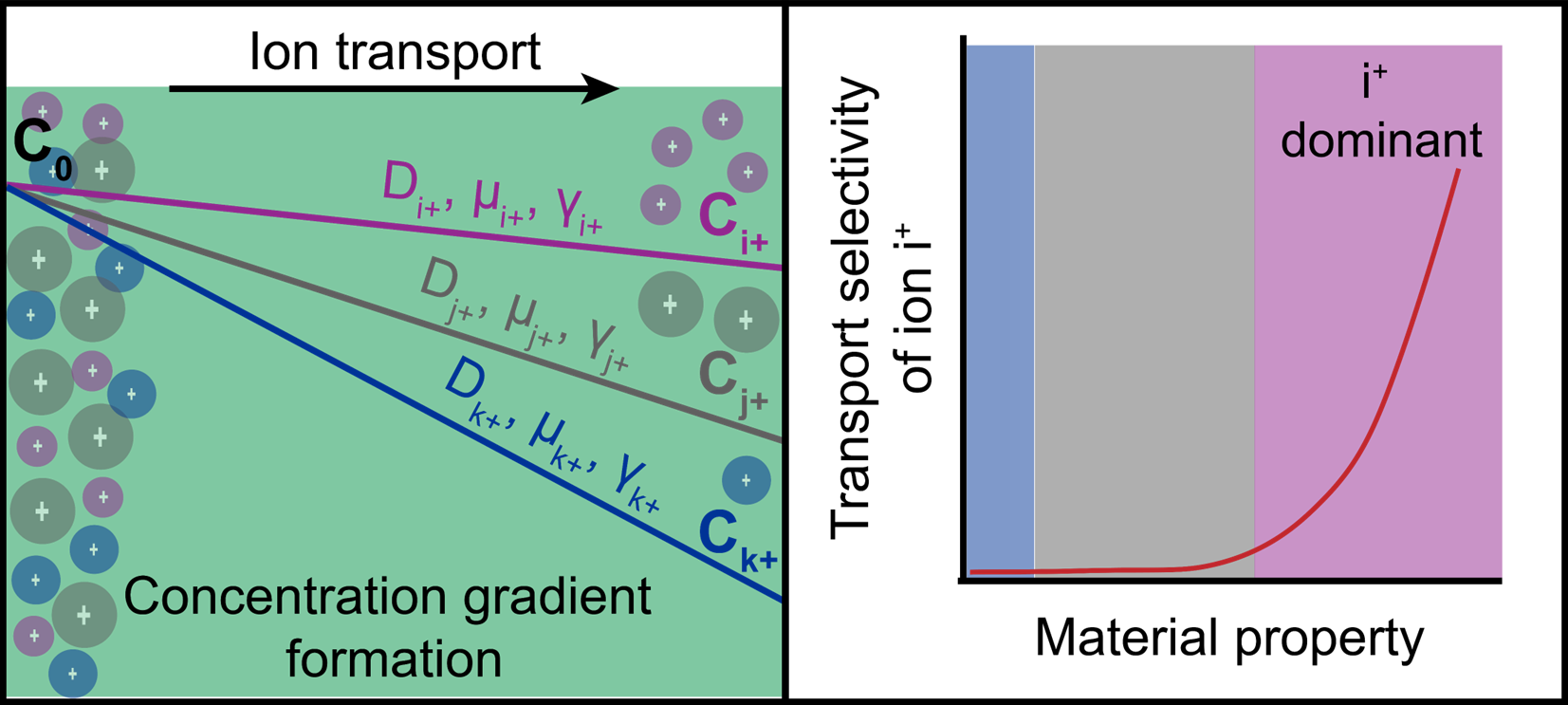
Selective Ion Transport
We are interested in exploring how material properties and electrochemical reactor design can influence selective ion transport for resource recovery. Our research interests in this area include:
Materials for selective transport
Reactor design and variable operation
Our toolbox for probing ion transport through various materials and interfaces includes:
Electrochemical techniques
Scattering techniques
Fluorescence techniques
Nuclear magnetic resonance spectroscopy